NASA Moon Landing Plan Now Hinges on 22 Starship Launches
A new internal estimate reveals that SpaceX would need to fly nearly two dozen missions to low-Earth orbit to fuel a single crewed lunar landing, raising concerns about the Artemis timeline.
By Yasmin Farouk ·
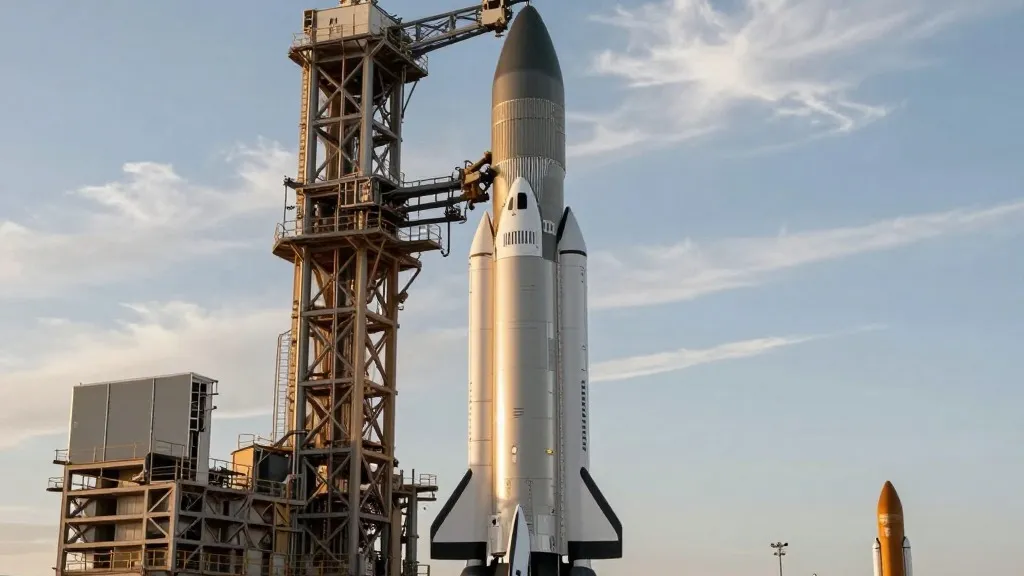
A newly surfaced estimate suggests that 22 Starship launches are required to support a single crewed Moon landing under NASA’s Artemis program. This figure, which has historically been guarded by the agency, provides a concrete look at the logistical scale needed to send humans to the lunar surface and bring them back. The revelation comes from a recent safety review, highlighting the sheer volume of propellant delivery necessary to make the mission viable.
The number emerged during the quarterly meeting of the NASA Aerospace Safety Advisory Panel held this week. Panel member Charlie Precourt, a former NASA astronaut, discussed the specific risks associated with the Artemis architecture. While the agency has long treated this metric with a degree of secrecy comparable to nuclear codes, the panel’s discussion has made the operational reality of the plan public. The focus was on the challenges of refueling the lander in orbit before it can depart for the Moon.
For years, NASA has been hesitant to commit to a specific number of launches. In 2023, Lisa Watson-Morgan, then-director of the Human Landing System, told reporters that the agency had a general idea but was reluctant to state an exact figure. She later characterized the requirement as being in the "high single digits to the low double digits." That estimate implied roughly a dozen flights, a substantial but manageable number for SpaceX's launch cadence.
The logistics behind these numbers are complex. A single lunar landing requires a "depot" Starship to be stationed in low-Earth orbit. This vehicle must then be filled with liquid oxygen and methane propellant by multiple "tanker" Starships. Under the earlier estimates, this would involve one depot launch followed by approximately 11 tanker missions. The new figure of 22 launches indicates a significant increase in the fueling requirement, or a shift in how the mission is being modeled for safety and redundancy.
The discrepancy between previous "high teens" estimates and the new 22-launch figure has sparked concern among some NASA officials. The primary worry is that SpaceX may not improve the lift capacity of the Starship rocket fast enough to reduce this number. If the launch count remains high, it could strain the ability to integrate the vehicle into NASA’s plan to return humans to the Moon this decade. The hope has always been that technological advancements would dramatically lower the tanker flight count, but current data suggests that improvement may be slower than anticipated.
This development underscores the fragility of the Artemis timeline. The program relies on a tight coordination between NASA’s mission control and SpaceX’s launch operations. Every additional launch adds a variable to the safety equation, increasing the complexity of the overall mission architecture. As the panel continues its review, the 22-launch estimate serves as a benchmark for how much fuel must be moved in orbit to ensure the crew can reach the Moon, land safely, and return to lunar orbit.
The shift in perspective highlights a broader tension in the Artemis program: the balance between ambitious goals and engineering realities. While the number of launches is a logistical detail, it has profound implications for the program's schedule and budget. If the lift capacity does not improve significantly, the agency may need to rethink its approach to lunar resupply. For now, the 22-launch figure stands as the latest official indication of the effort required to make the lunar landing a reality.
As NASA and SpaceX continue to work through these challenges, the focus remains on ensuring that the Starship system can meet the rigorous demands of deep space exploration. The upcoming months will likely bring further clarification on how the agency intends to manage this launch volume. Until then, the 22-launch estimate provides a clear, if daunting, picture of the work ahead in the race to return to the Moon.
Source: Ars Technica