Tesla Cites Hand Mechanics and AI Gaps in New Optimus Roadmap
Elon Musk indicates that external deliveries of the humanoid robot are now targeted for late 2027, as the company grapples with durability and software challenges.
By Xiaoyu Wang ·
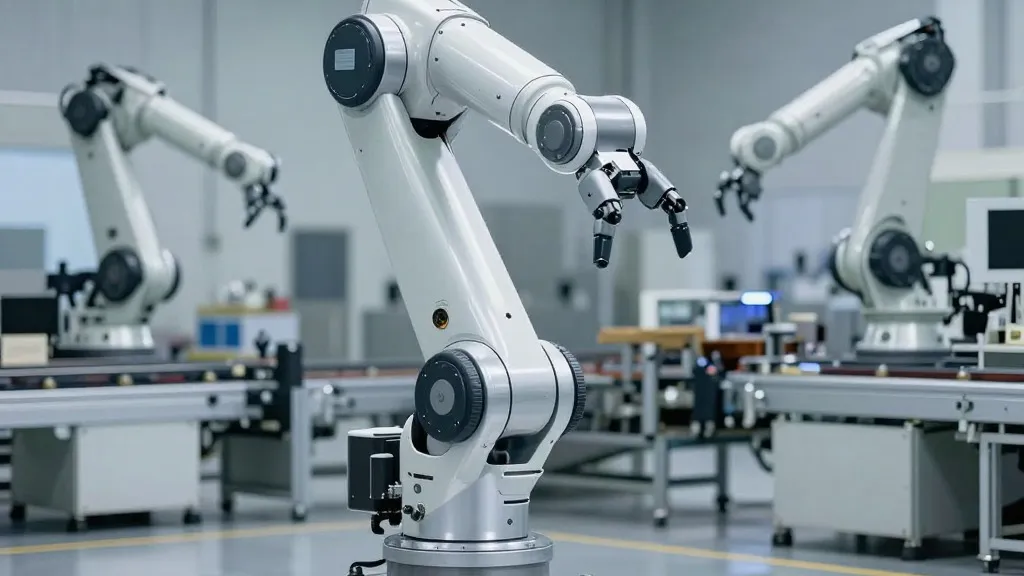
The path to commercializing Tesla’s Optimus humanoid robot remains fraught with mechanical and software hurdles, as company leadership acknowledged that critical components still require refinement. During the Q3 2026 earnings call, CEO Elon Musk stated that the robot’s hands, overall durability, and artificial intelligence systems are the primary barriers to mass production. Consequently, the timeline for delivering the unit to outside customers has been adjusted to the end of 2027, marking another shift in the project’s schedule.
Tesla has initiated early production of Optimus on its high-volume assembly line in Fremont, California, a facility previously dedicated to the Model S and Model X. While much of the infrastructure for an annual capacity of one million units is already installed, Musk noted that reaching a weekly output of approximately 20,000 units will take at least a year, or possibly longer, due to ongoing design changes. These modifications are necessary to ensure the robot can withstand the rigors of industrial use without wearing out after just a month of operation.
A key technical challenge identified by Tesla engineers is the design of the robot’s hand. A representative on the call described the hand as one of the most difficult hardware areas to perfect, citing reliability concerns with custom gears. Musk agreed, explaining that the fingers must be soft enough to manipulate delicate objects yet durable enough to survive constant wear, a feat complicated by the fact that robotic components cannot heal like human skin. This hardware issue is compounded by unresolved problems in the AI architecture.
To address the AI deficit, Tesla plans to construct an “Optimus Academy” where 10,000 to 20,000 robots will practice various tasks to generate training data. This approach is necessary because the company lacks a large fleet of deployed robots to collect real-world data, unlike its automotive fleet which supports its Full Self-Driving program. Additionally, Tesla intends to integrate its AI5 chip into the Optimus units around April 2027 to enhance processing capabilities.
Musk addressed the competitive landscape during the call, asserting that to his knowledge, no other company is close to Tesla in developing a general-purpose humanoid robot. He promised to release a video within one to two months demonstrating the robot performing tasks that are not pre-programmed, aiming to distinguish Tesla’s technology from competitors who may rely on scripted routines that do not reflect real-world capabilities.
However, competitors appear to be advancing on similar timelines. XPeng, a Chinese automaker, activated an automated production line for its IRON robot in September, with over 80% of core processes automated. The company plans to begin mass production by the end of 2026 and start deliveries in the first half of 2027, initially targeting retail environments. Similarly, Boston Dynamics began producing its electric Atlas robot in January and has already committed all of its 2026 deployments, including to Google DeepMind and Hyundai, which plans to deploy 25,000 robots across its plants.
The shifting timeline reflects a broader pattern of delays in the humanoid robotics sector. In 2024, Musk had projected internal use in 2025 and high-volume external sales in 2026. By January 2025, he estimated the production of 10,000 units that year, though he later admitted that few were performing useful work. The current target of late 2027 for external deliveries suggests that the technical challenges of creating a reliable, general-purpose robot remain significant for all market participants.
Source: Electrek